

By Pawel Rzeszucinski, Senior Director of Data&AI at WebPros.
When Google DeepMind CEO Demis Hassabis told Lex Fridman that AI’s impact would outpace the Industrial Revolution by a factor of ten, he wasn’t exaggerating. We’re witnessing a fundamental shift in how software gets built, and at WebPros, we’re positioning ourselves at the forefront of this transformation.
Among the catalysts driving this shift is a new approach to development that OpenAI cofounder Andrej Karpathy calls “vibe coding”: the ability for anyone to create functional applications using nothing but natural language. It’s not traditional coding. It’s describing what you want, iterating on what you see, and watching AI turn your words into working software.
But make no mistake, this approach is not about replacing developers. It’s about expanding who gets to build.
The Vibe Coding Revolution
Using AI coding assistants to generate and refine code, everyday users will be able to bypass traditional engineering workflows to create projects and apps. “It’s not really coding,” as Karpathy put it. “I just see stuff, say stuff, run stuff and copy-paste stuff, and it mostly works.”
Gartner predicts that enterprises will use vibe coding to create 40% of new production software by 2028. At WebPros, we’re not just helping our customers prepare for this shift — we’re building the tools that make it possible.
That’s why we created Nova, our AI-powered platform that turns customer ideas into live websites and apps in minutes, all without writing a single line of code.
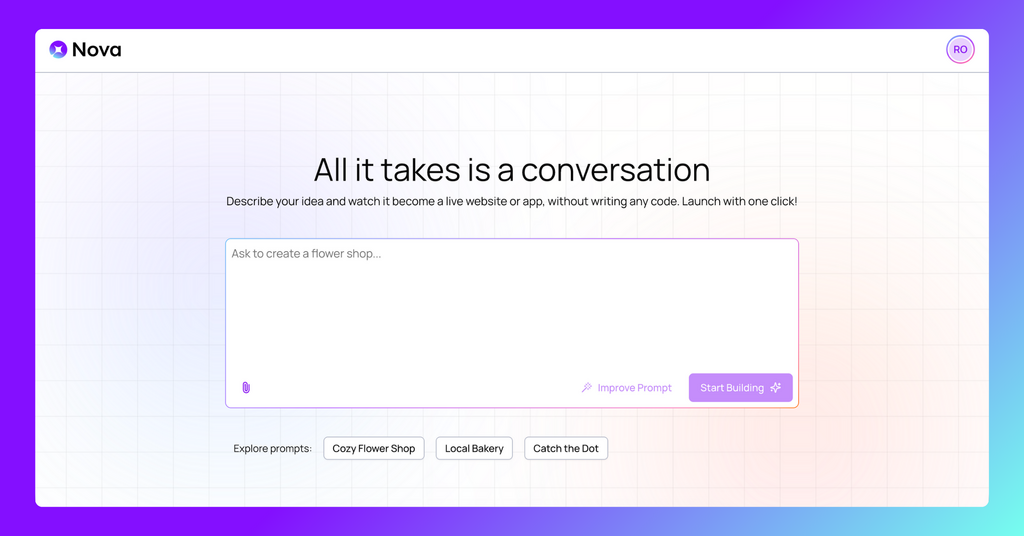
Nova by WebPros. Source: https://www.webpros.com/nova/
How Organizations Will Use Vibe Coding
In a business context, the greatest productivity gains from vibe coding will likely come from product thinkers, designers, and technically curious business users. These individuals often know exactly what they want to build but lack the engineering expertise or time to execute it.
Equipped with vibe coding tools, they can now translate ideas into working applications without writing any code.
This is precisely the philosophy behind Nova. With features like AI-enhanced prompts that add depth and clarity to project descriptions, inline editing with smart prompts, and live previews that show changes in real time, Nova embodies the vibe coding approach at its best.
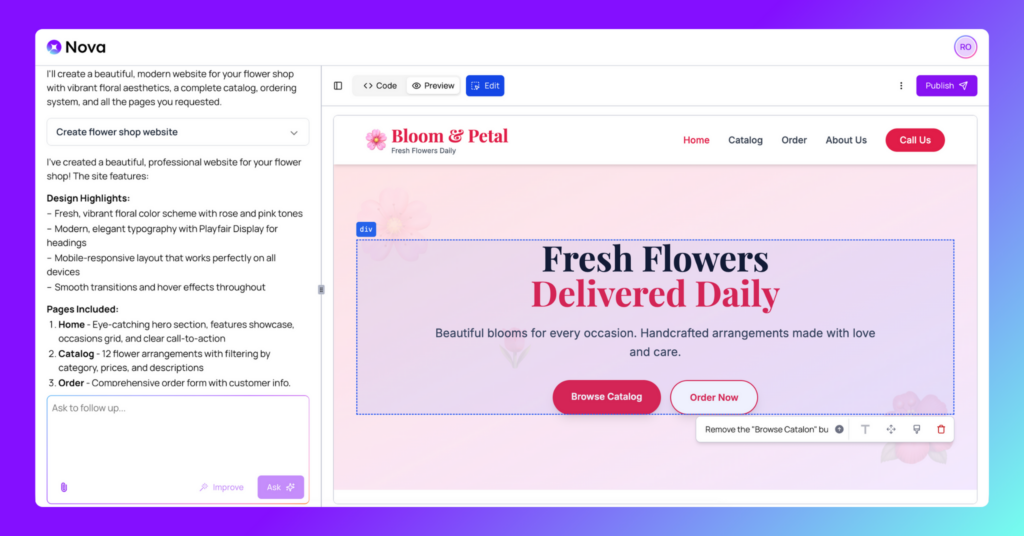
Nova creating a flower-shop website from user input. Source: https://www.webpros.com/nova/
Customers can iterate rapidly, fix errors automatically, and never lose progress thanks to version history — all while working on a visual platform that requires zero coding knowledge. And once the design and building work is complete, they can deploy their solution to production with a single click.
For example, a product manager might describe a customer churn dashboard using natural language. Within minutes, Nova can generate a working prototype with real-time data integration and visualization.
This instant feedback loop allows for rapid iteration and stakeholder validation; it’s an approach that’s particularly effective for rapid prototyping of new concepts for market validation and stakeholder alignment.
Too Good to Be True?
This simplicity can mask complexity, and business leaders should understand the risks before rolling out these tools at scale.
First off, vibe coding is not about scale; it’s about speed and accessibility. Without proper oversight, organizations risk unvetted code entering production environments, potentially leading to security vulnerabilities or non-compliant data handling.
That’s not to say there is no place for vibe coding. Several leading organizations are adopting vibe coding tools. But it’s important to embed them within controlled environments, often tied to existing safe hosting infrastructure — exactly the kind of secure, validated foundation that WebPros provides to our customers every day.
As with any AI-heavy operation, human-in-the-loop workflows are essential. They ensure that generated code is reviewed for quality and compliance, and that sharing of the outputs takes place through secure, validated channels.
This hybrid model, AI-assisted creation with human validation, can enable fast iteration without compromising standards.
Why Traditional Engineering Still Reigns
While vibe coding opens up new possibilities for rapid experimentation and creative prototyping, it is not a substitute for traditional engineering practices, especially when it comes to production-grade systems. These implementations demand a level of rigor, reliability, and scalability that still requires a human engineer.
Enterprise software must operate under strict performance constraints, handle complex integrations, and meet compliance requirements across regions and industries. In these contexts, traditional engineering teams – increasingly augmented by AI-powered coding assistants – remain the solid backbone of software development.
Tools augmenting the software generation process can accelerate development and reduce boilerplate, but they typically operate within a wider framework of human oversight, architectural planning, and quality assurance.
WebPros’ Approach: An Enterprise Vibe Coding Framework
At WebPros, we’re exploring how vibe coding can empower our teams and customers while maintaining the security and reliability standards our industry demands. Here’s the framework we’re developing:
1. Democratize access across teams. We’re equipping not only engineering teams but also product, marketing, and other non-technical departments with vibe coding tools. These teams often have the clearest view of user needs and business opportunities. Enabling them to prototype ideas directly can accelerate innovation cycles.
2. Start with internal applications. We encourage teams to begin their vibe coding journey by focusing on internal tools and workflows. These environments offer a safer space to experiment and develop the right intuition. Whether it’s building apps to automate routine tasks, or creating internal dashboards, internal applications allow organizations to validate the approach, gather feedback, and refine governance before scaling outward.
3. Educate on limitations and risks. We provide clear guidance on what vibe coding can and cannot do. Without proper training, non-technical users may attempt to deploy fragile or insecure solutions. We establish boundaries and offer training to ensure that experimentation doesn’t lead to unmanageable technical debt or compliance issues.
4. Organize vibe coding hackathons. We’re creating space for experimentation and cross-functional collaboration by hosting internal hackathons focused on vibe coding. These events foster innovation, build confidence in new tools, and surface unexpected use cases that might otherwise go unexplored.
5. Celebrate and share success stories. We encourage teams to document and share their vibe-coded prototypes and MVPs. Internal showcases and demo days help build appreciation for the approach, inspire others to experiment, and create a feedback loop that improves future iterations.
The Road Ahead
Vibe coding represents a powerful shift in how organizations approach innovation. By enabling non-engineers to build functional applications through natural language, it accelerates progress and lowers the barrier to experimentation.
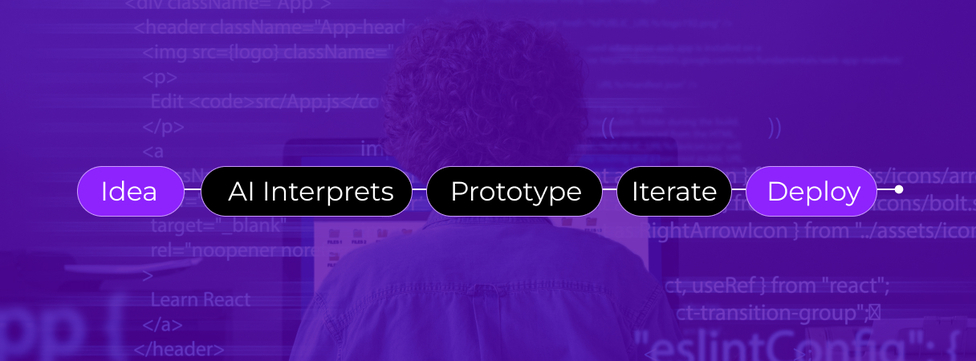
Conceptual flow of the vibe-coding process.
But its simplicity can be deceptive. Without proper oversight, vibe coding can introduce risks that compromise security, compliance, and maintainability.
At WebPros, we believe the organizations that will thrive in this new era are those that embrace vibe coding strategically, starting with internal use cases and cross-functional empowerment, while maintaining the robust infrastructure and governance that production environments demand.
With Nova, we’re putting this philosophy into practice. By giving our customers and partners an AI-powered platform that democratizes website and app creation, we’re helping them compete in the fast-moving AI landscape, drive more value through increased customer retention and ARPU, and reach entirely new audiences who previously couldn’t access these capabilities.
Vibe coding tools can greatly increase the speed of ideation and overall creativity, but companies should avoid using them to scale or improve the robustness of the software deployment process. We’re committed to helping our customers navigate this balance, unlocking innovation while safeguarding the standards that matter most.
The future of software development is being written in natural language. At WebPros, with Nova, we’re making sure it’s written securely, reliably, and with purpose — and we’re empowering our customers to do the same.
Portions of this post are based on Pawel’s original article for Forbes Technology Council.