

By Pawel Rzeszucinski, Senior Director of Data&AI at WebPros
The AI landscape in 2025 is marked by both extraordinary progress and considerable confusion. On one side, we see unprecedented investments in computational infrastructure and the rapid release of increasingly capable models. On the other, there is a growing wave of headlines suggesting that many AI projects are destined to fail — often based on misinterpretations of original research. Concerns about a potential AI bubble are also becoming more common.
At CloudFest USA, my intention was to move beyond the noise and focus on the developments that have genuinely driven progress this year, particularly within the broader Web Enablement Ecosystem.
The Current State of AI: Concentration and Scale
To illustrate the current landscape, I referenced a Bloomberg analysis showing how a small group of companies is shaping the future of AI through multi-billion-dollar investments in compute. The scale of these investments is both impressive and, in some ways, daunting.
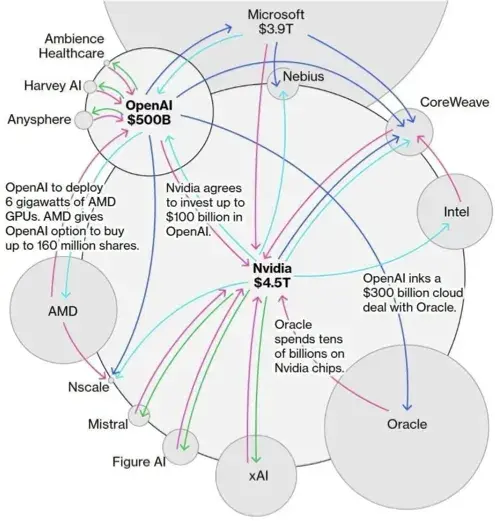
Yet despite this influx of capital, not all visible innovations are meaningful. While we’re seeing the emergence of AI-powered footwear, AI-enabled toothbrushes, and even AI translators for animals, these examples often distract from the more substantive changes happening across the industry.
Instead, I highlighted three trends that have delivered tangible value in 2025 — and explained how WebPros is applying these developments to benefit our partners.
Trend 1: Vibe Coding
The concept of vibe coding, introduced by Andrej Karpathy, encapsulates a new paradigm for code generation and software development. Although still relatively new, vibe coding has already moved through several phases:
- First phase: AI tools assist developers with code snippets and autocompletions.
- Second phase: AI became a collaborative partner, capable of generating and understanding larger blocks of code.
- Third phase: We have now entered a no-code era, where individuals can build applications using natural language, without any coding expertise.
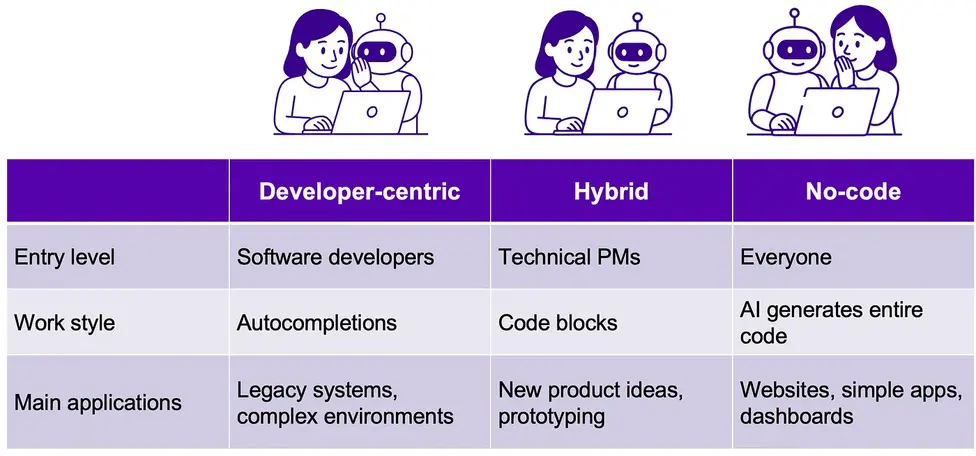
Different flavours of vibe coding.
As I often say, “Vibe coding redefines who gets to build.” The aim is not to replace developers — they remain essential for large-scale, production-grade, secure, and reliable systems — but to empower a broader range of people to create digital solutions. Vibe coding lowers the barrier to entry.
At WebPros, this philosophy is embodied in Nova, our no-code, natural-language app and website builder. Nova enables users to describe their ideas in plain language, refine and improve them through guided interactions, and deploy results without technical barriers.
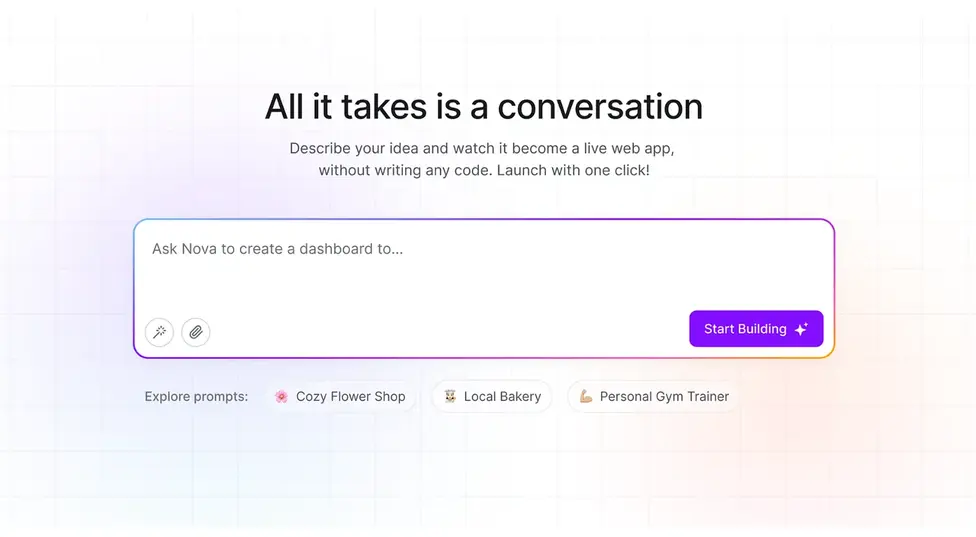
Nova by WebPros. A no-code app and website builder. Source: https://www.webpros.com/nova/
Increasingly, WebPros products are available through WebPros Cloud, our fully managed wholesale infrastructure platform designed for hosters, registrars, and resellers. This platform allows partners to create, host, and manage instances of WebPros products — including managed WordPress (WP Squared), WHMCS, and soon, Nova — on secure, scalable, globally distributed hardware, without requiring capital expenditure on data centers or complex infrastructure operations.
Trend 2: Generative Engine Optimization (GEO)
Generative Engine Optimization (GEO) reflects a fundamental shift in how individuals search for information online — and how brands are discovered. The transition from traditional search engines to large language models (LLMs) such as ChatGPT, Gemini, Claude, and Copilot is already underway.
A report from the first quarter of 2025 showed that while traditional search traffic declined slightly (by 0.5%), traffic from LLMs increased by 80%. In absolute terms, search engines still dominate, with Google approaching 2 trillion visits. But LLM traffic grew from 30 billion to 55 billion visits, placing it alongside major web platforms in scale.
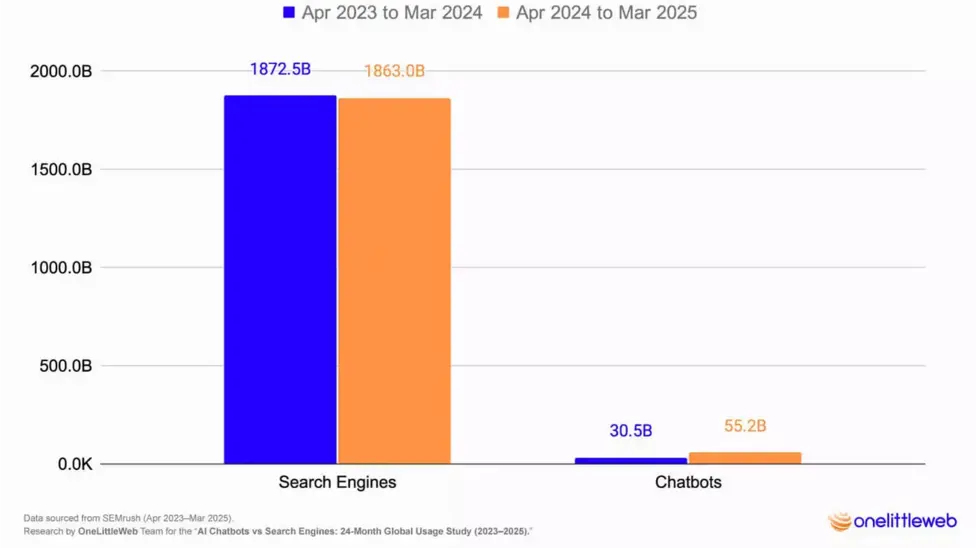
YoY traffic originating from classic search engines and LLM chatbots. Source: https://onelittleweb.com/data-studies/ai-chatbots-vs-search-engines/
This growth occurred even before today’s LLMs gained meaningful real-time web capabilities. Since that report:
- LLMs have acquired native search functionality,
- ChatGPT has introduced integrations with third-party providers such as Shopify and Booking.com,
- Model Context Protocols (MCPs) have standardized how agents communicate with applications,
- and early versions of agent payment protocols (e.g., AP2) are emerging, enabling AI agents to execute online transactions autonomously.
Collectively, these capabilities are transforming LLMs from passive information tools into active, transactional agents. The implication is clear: relying solely on traditional SEO is no longer sufficient.
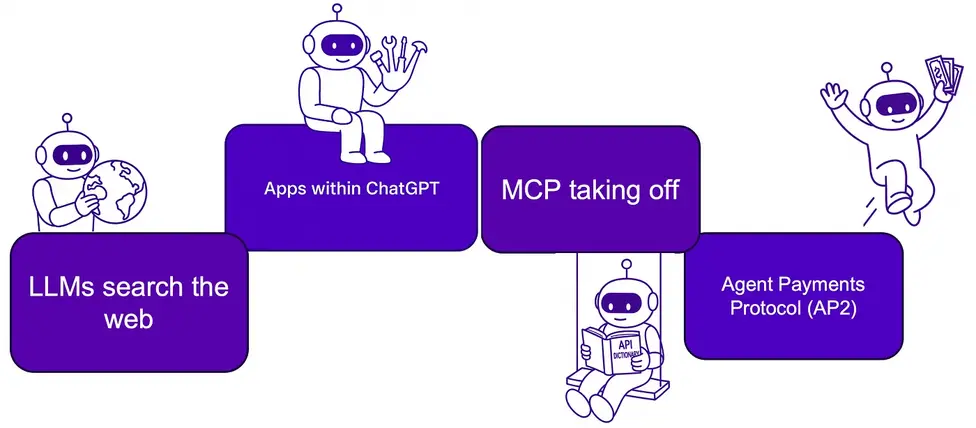
Advancements in AI throughout 2025 are poised to drive even greater traffic and engagement across the web.
To address this shift, we developed AI Signal, a diagnostic tool that reveals how brands are represented by large language models. AI Signal helps organizations understand what information AI systems surface about their brand, identify inaccuracies or gaps, and benchmark visibility and sentiment against competitors.
With no technical setup required, it scans domains, analyzes AI-generated mentions, and provides actionable insights to improve visibility in generative and conversational environments.
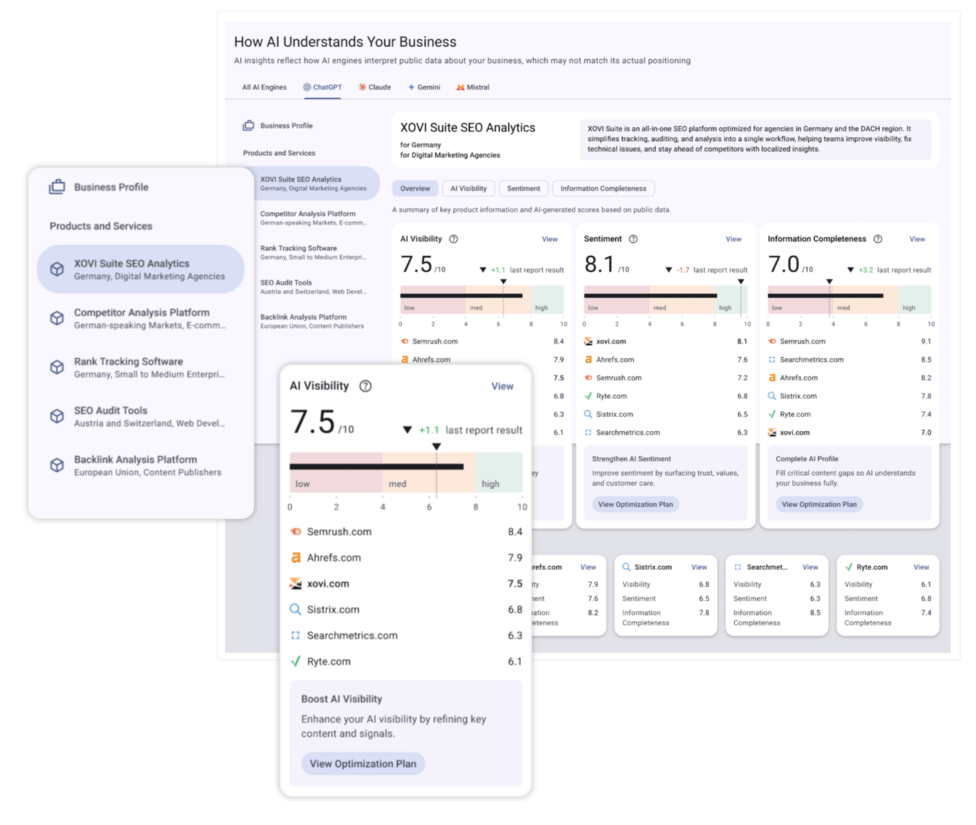
AI Signal shows how your brand appears in AI conversations and provides actionable insights to boost your visibility in generative search. Source: https://www.xovi.com/ai-signal/
Trend 3: Model Context Protocol (MCP)
The Model Context Protocol (MCP) is an open standard developed by Anthropic to enable AI agents and applications to securely and consistently connect with external tools, data sources, and services. Historically, connecting LLMs to external systems required custom integrations, resulting in slow iteration, fragmented workflows, and limited access to context.
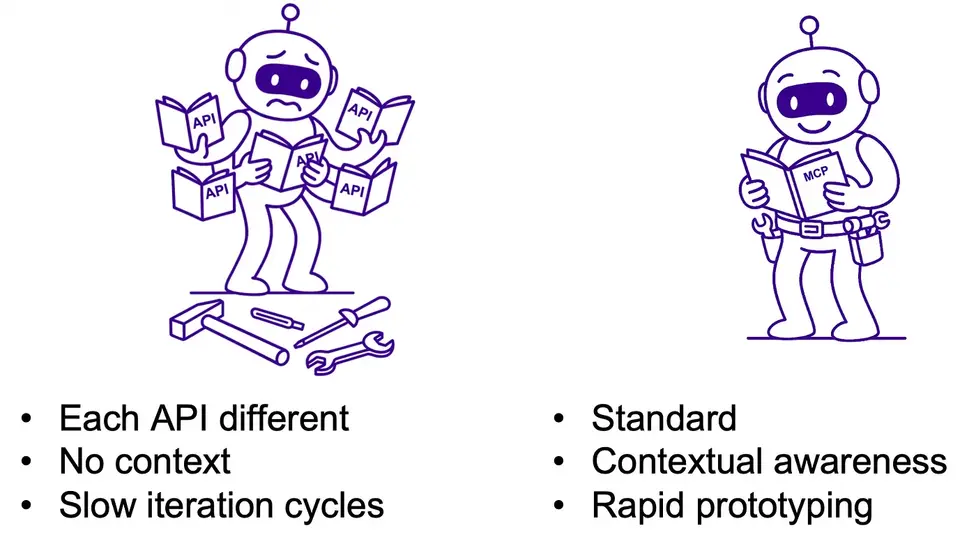
MCP introduced standardisation to external LLM communication.
MCP introduces a standardized approach, allowing agents to interpret objectives in natural language and interact with a wide range of applications reliably and efficiently.
While many organizations are adopting MCP to connect agents to their core offerings — and WebPros is no exception — we are also extending its application further.
The Web Enablement Ecosystem is complex: hosting providers, control panels, CMS platforms, website builders, and countless supporting systems. Understanding this environment holistically has always been challenging.
To address this, WebPros operates an internal tool that crawls more than two billion hostnames each month, collecting data on CMS types, SSL status, DNS configurations, and builder usage. By integrating MCP with this dataset, WebPros partners will soon be able to answer business-critical questions such as:
- How many domains migrated away last month?
- How many domains have active content?
- What percentage lack SSL certificates?
MCP makes it possible to surface these insights quickly and through natural language interactions.
Conclusion
Reflecting on these developments, it is clear that 2025 was not defined by novelty for novelty’s sake, but by meaningful shifts in how AI is applied across the web ecosystem. The rise of vibe coding has redefined who can create digital experiences, moving us toward an inclusive, natural-language-driven model of development. Nova embodies this transition, allowing anyone with an idea to bring it to life.
At the same time, users are discovering brands in entirely new ways. The rapid growth of LLM-driven traffic — even before full web capabilities matured — signals a profound change in user behavior. As LLMs evolve into transactional agents with standardized communication protocols like MCP, visibility in AI-generated outputs becomes essential. Tools like AI Signal help businesses understand and improve their presence in these emerging discovery pathways.
Finally, MCP marks a turning point in how AI agents interact with external systems. By standardizing these integrations, it enables faster, more reliable automation at scale. WebPros is using this standard to unlock insights previously buried in the complexity of the web ecosystem — giving partners greater clarity and control.
Supporting all of this is WebPros Cloud, our fully managed wholesale infrastructure platform. Designed for hosters, registrars, and resellers, it eliminates the need for capital investment in data centers and simplifies the deployment of services such as WordPress, WHMCS, and soon Nova, and more. By providing scalable, secure, white-labeled infrastructure, WebPros Cloud enables our partners to focus on innovation and growth while we manage the operational complexity.
These trends are converging, and together they point toward a future where AI becomes a foundational layer of the web itself. At WebPros, we are committed to helping our partners navigate — and lead — that future.